
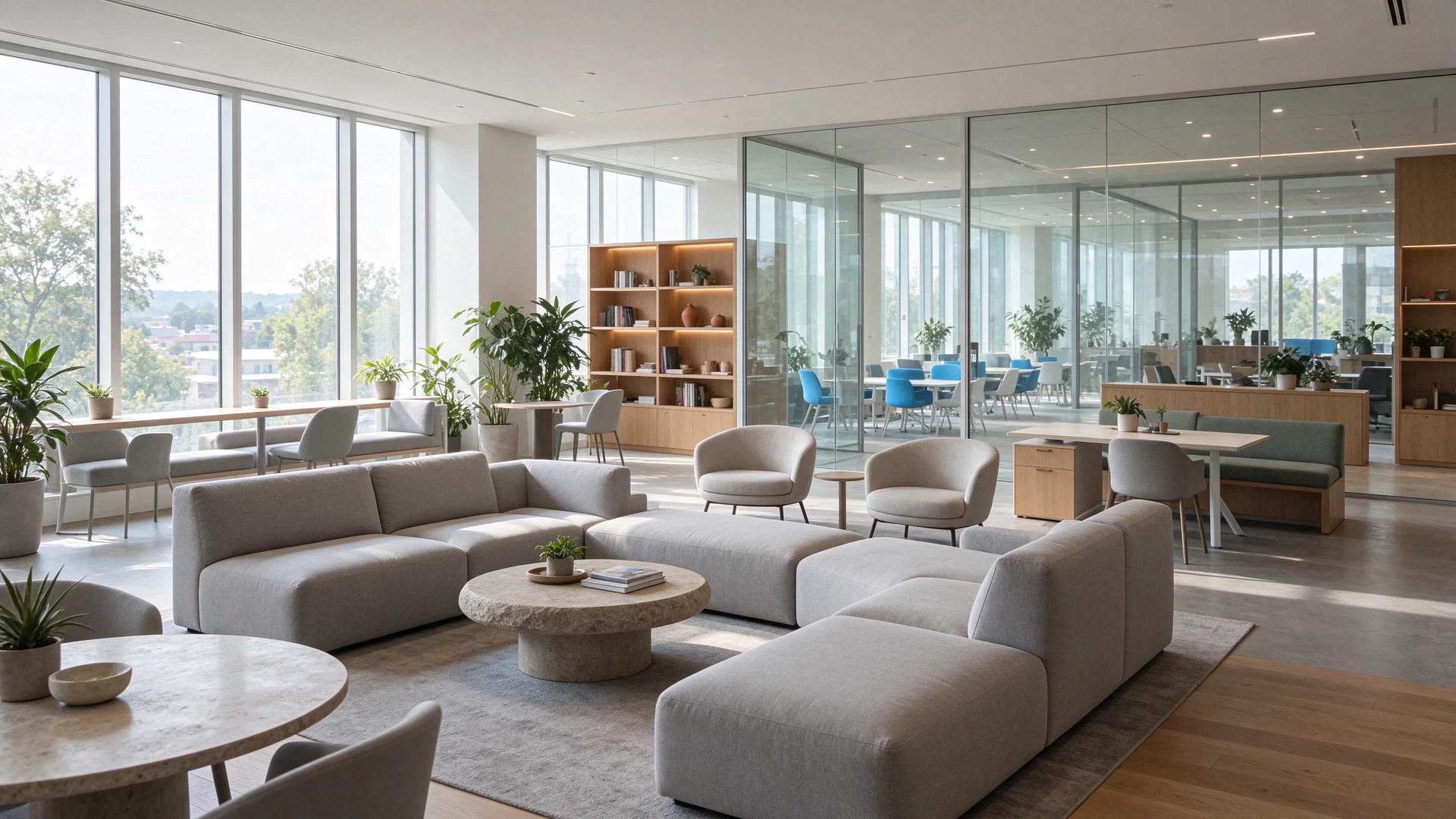
1. Plan for the team actually using it
Record your current headcount, likely hiring and the busiest in-office day. For a hybrid team, average attendance alone can hide the pressure when everyone arrives together. Decide whether desks will be assigned or shared, and how bookings will work.
Sketch the work settings you need: quiet space for calls, collaborative desks, private conversations and meetings with clients. Include reception, storage and a place to eat. Ask staff what makes the current office difficult before carrying those problems into a new layout.
Supporting reading: [1]
2. Test the location and daily access
Shortlist areas around staff journeys and customer access, not an address alone. Visit during your normal arrival and departure times. Check practical public-transport connections, the walk from stops and whether visitors can find the entrance easily.
Confirm how many parking bays are included, what additional bays cost and whether visitor parking is separate. Walk the route from parking to the office, including step-free access where needed. A cheaper rental may be less useful if the daily journey creates difficulties for your team.
Supporting reading: [1]
3. Check usable size, not just advertised m²
There is no single m²-per-person formula that suits every business. Use your desk and room requirements to test a floor plan. Columns, passages and awkward corners can make two offices with the same advertised area work very differently.
Ask what the quoted area includes and whether shared areas affect the chargeable space. Check room dimensions, furniture clearances and storage on site. Identify realistic growth space without paying for a large empty section you cannot justify.
Supporting reading: [1]
4. Separate monthly costs from upfront cash
Build a budget in rand (R), with separate monthly and once-off totals. For a lease, request base rent, operating charges, utilities and parking separately. Confirm what is included, how charges can change and the rental escalation. Compare the expected commitment across the proposed term, not only the opening month.
Allow upfront cash for the lease deposit, fit-out, furniture, cabling and the move. Ask whether any landlord contribution is offered and what conditions apply; do not assume one. Clarify maintenance and end-of-lease reinstatement responsibilities.
For a purchase, compare the price and required funding with acquisition costs, alterations and ongoing ownership expenses, including maintenance and any applicable levies. A purchase deposit is not the same commitment as a lease security deposit. Have appropriate advisers assess the transaction, financing and tax treatment rather than treating rent and a loan instalment as directly equivalent.
Supporting reading: [1]
5. Verify connectivity and backup power
Ask which internet providers can serve the actual unit, whether fibre is installed and how long activation may take. Check mobile reception in the rooms you will use. Establish who pays for installation and whether you can choose your provider.
For backup power, ask what it supplies: desks, internet equipment, lifts or only common areas. Confirm capacity, operating arrangements and additional charges. Check air-conditioning hours too. Request written details and a demonstration where practical rather than relying on a general building description.
Supporting reading: [1]
6. Work backwards from occupation
Set a target occupation date and work backwards through approvals, negotiations, fit-out, connectivity and moving. Check your existing lease notice requirements before committing elsewhere. For a purchase, ask your advisers to explain the expected transfer and occupation sequence; do not assume they happen together.
Turn the checklist into a short brief: rent or buy, preferred areas, headcount and peak attendance, approximate m², essential rooms, parking, total budget and required date. Separate non-negotiables from preferences. Share that brief with officeorwarehouse? so the enquiry starts with your business requirements, rather than an attractive photograph.
Supporting reading: [1]